Choose timber with the whole site in mind
The look, budget, exposure and desired maintenance level all influence the right board. A builder can discuss timber grades, fixing options, access and under-deck ventilation for your site.
 DeckingGeelongBegin your brief →
Timber decking project information for Geelong, including Merbau, Spotted Gum and treated-pine options.
Begin your project brief →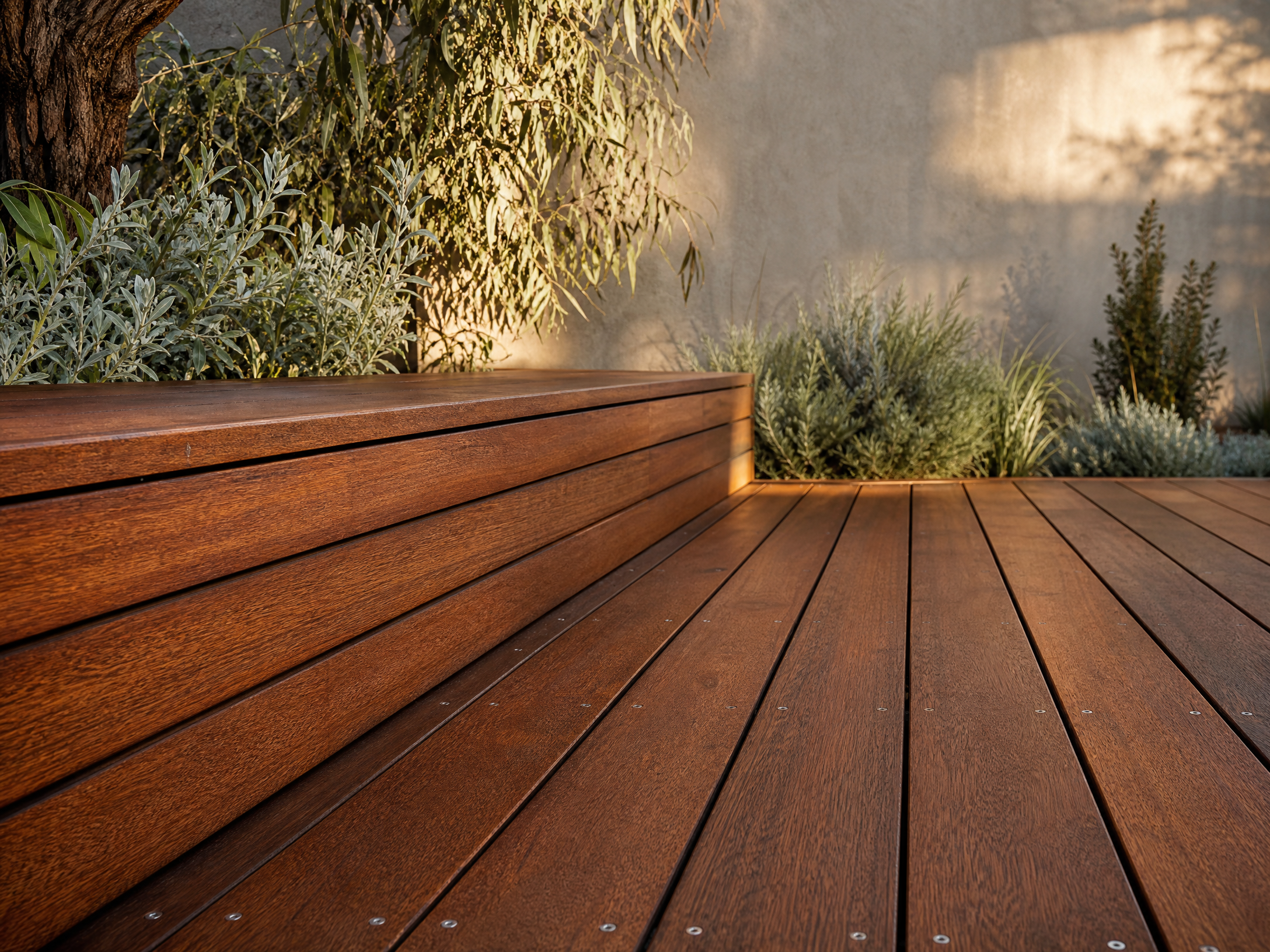
A timber choice is as much about the maintenance rhythm and exposure as it is about its colour on day one.
The look, budget, exposure and desired maintenance level all influence the right board. A builder can discuss timber grades, fixing options, access and under-deck ventilation for your site.
A comfortable deck relies on sensible footing, framing, drainage and board spacing. Make sure the quote describes the structural scope, not only the visible finish.
Cleaning and periodic coating can help maintain timber’s appearance. Your contractor can advise on realistic maintenance intervals for the species and exposure of your deck.
Timber brings grain, colour and a surface that can change character over time. The useful decision is not simply whether you prefer Merbau, Spotted Gum or treated pine. It is how the chosen timber, the level of exposure, the support below the boards and the care you are prepared to give the deck will work together. That perspective makes it easier to compare an installed project scope rather than comparing only a board price or a photograph of a finished deck.
Merbau, Spotted Gum and treated pine are common names in decking discussions, yet each material conversation should begin with the particular project. Look at the desired colour, natural variation, surrounding brick or cladding, the amount of sun and whether the deck will meet a pool, lawn or covered outdoor room. Actual samples in the proposed location can make the differences easier to judge.
A provider can explain the material options they propose, including how board widths, lengths, grades, availability and fixing methods may affect the finished layout. Avoid assuming that one species is ideal for every site; a good discussion connects the material to the exposure, budget, intended use and ongoing care plan.
The visible timber sits over framing, footings, bearers, joists and a route for water to move away from the structure. Deck height, ground levels, access under the house, existing paving and garden edges all influence the practical approach. These matters can change the scope even when two decks look similar from above.
Ask the provider to explain ventilation, board spacing, fixing approach, drainage and the way the new deck will meet doors, stairs or retained landscaping. If the project involves an existing deck, share photos of the condition and structure rather than assuming it can be reused without assessment.
Timber is often chosen for warmth and repairability, but it is not a maintenance-free material. Cleaning, coatings and periodic inspection are part of the ownership conversation. The useful question is not how little care any timber will ever need; it is what level of care feels realistic for your household and the deck’s exposure.
A clear written scope should identify the proposed material, structural work, transitions, removal assumptions and any site conditions that need further confirmation. Include the expected care discussion when comparing timber with composite decking.
Compare actual samples, desired appearance, site conditions and the maintenance you are willing to undertake. A provider can explain the material options they are proposing for your site rather than relying on a generic species ranking.
Footings, framing, ventilation, drainage and fixings affect how the deck meets the ground, house and surrounding surfaces. Ask for the substructure to be described clearly in the scope.
The condition and suitability of any existing structure should be assessed by the provider before a new surface is assumed to be appropriate. Photographs and access information are useful at the enquiry stage.
Ask how the proposed timber is expected to be cleaned, coated and inspected in the specific exposure of the site. Confirm product-specific care information with the relevant supplier or provider.
Tell us what you are planning, where the project is and the details that matter to the space.
Share your suburb and the outdoor space you are considering. A clearer project brief makes the next project conversation more useful.