Use the project questions to make the next conversation clearer.
The better decking material is rarely the one with the loudest claim. A useful choice starts with the outdoor room you are trying to create, the way it will be used across the seasons and the upkeep that will still feel realistic a few years from now. Timber and composite can both support generous outdoor living, but they ask different questions about appearance, surface character, detailing and care. This guide helps you form those questions before comparing an installed project with an independent provider.
In this guideStart with use⌄
Start with how the outdoor room will be used.
Before comparing boards, map the ordinary day. Is the deck mainly a place for family meals, a route to the garden, a pool-adjacent surface or a larger entertaining room? Think about bare feet, furniture movement, pets, outdoor cooking and the way people will enter from the house. These details connect a product sample to the actual rhythm of the site.
Describe the setting around the proposed deck as well. Existing brick, cladding, paving, garden edges and windows can influence the visual choice, while access, levels, nearby doors and water paths can shape the project more broadly. A clear starting brief does not decide the material; it makes it easier to explain relevant options.
Compare the material character before comparing the routine.
Timber brings natural grain, colour variation and a surface that can develop character over time. That variation is often exactly why people choose it. The final appearance is shaped by species, board selection, exposure and the care that follows installation. Looking at real samples where the deck will sit can make the conversation more grounded.
Composite decking boards are usually selected for a more consistent finish and a different maintenance rhythm. The board system, capping, colour, texture and edge detail may all matter to the result. Ask whether that consistency suits the house, expected sun, surrounding hard surfaces and the visual outcome you want.
Timber: grain, variation and a care rhythm.
A timber conversation can begin with species names such as Merbau, Spotted Gum or treated pine, but the useful comparison goes further. Consider the range of grain and tone you like, the relationship to the house, the desired board layout and the amount of sun and moisture the surface will face.
Timber is not a maintenance-free surface. Cleaning, coatings and periodic inspection belong in the ownership discussion before a selection is made. That does not make timber impractical; it means the project should match the routine your household is willing to keep. A written scope should make visible boards, structure and transitions easier to understand together.
Composite: board systems, finish consistency and detail.
Composite decking should be considered as an installed system, not only a colour board. The supporting structure, board direction, fastening method, perimeter detailing, gaps and water paths all affect the finished result. A sample helps with colour and texture, but corners, stair edges, doors, garden interfaces and access can be just as important.
Different products may have different installation and care requirements. Bring the actual site into the discussion: reflected light from paving or water, full afternoon sun, shade, wet-foot traffic, wind exposure and the way the deck meets the house. The provider and relevant product information can explain which detail questions should be resolved.
The subframe and layout do not disappear with the board choice.
Whether the upper surface is timber or composite, the project still needs a conversation about the structure beneath it. Levels, footings, framing, drainage, ventilation, existing paving and access under or around the house can all affect the scope. A deck that looks simple from above may have a more involved relationship with ground conditions or old structures.
Ask how the chosen surface will be supported, how water is expected to leave the area, and how the new deck will meet stairs, paths, landscaping or an existing outdoor room. The independent provider who may take on the work should confirm the exact construction approach and any matters requiring further assessment.
Turn a material preference into a useful project brief.
A useful material brief can include the rough area and height, a few photos, the suburb, intended use, access from the street and whether an old deck is present. Mention the parts of the decision that are still open, such as natural variation versus a more uniform finish, expected care, pool adjacency or the connection to a future pergola.
When comparing proposals, look beyond a headline material name. Ask what is included beneath the surface, how transitions and edges are treated, what assumptions have been made about access or removal, and which product-specific care information applies. A material decision is clearer when it is connected to the whole outdoor room.
Read the surface as part of a whole system.
A finish can be compared in two parts: the visible character underfoot and the details that connect it to the surrounding outdoor room.
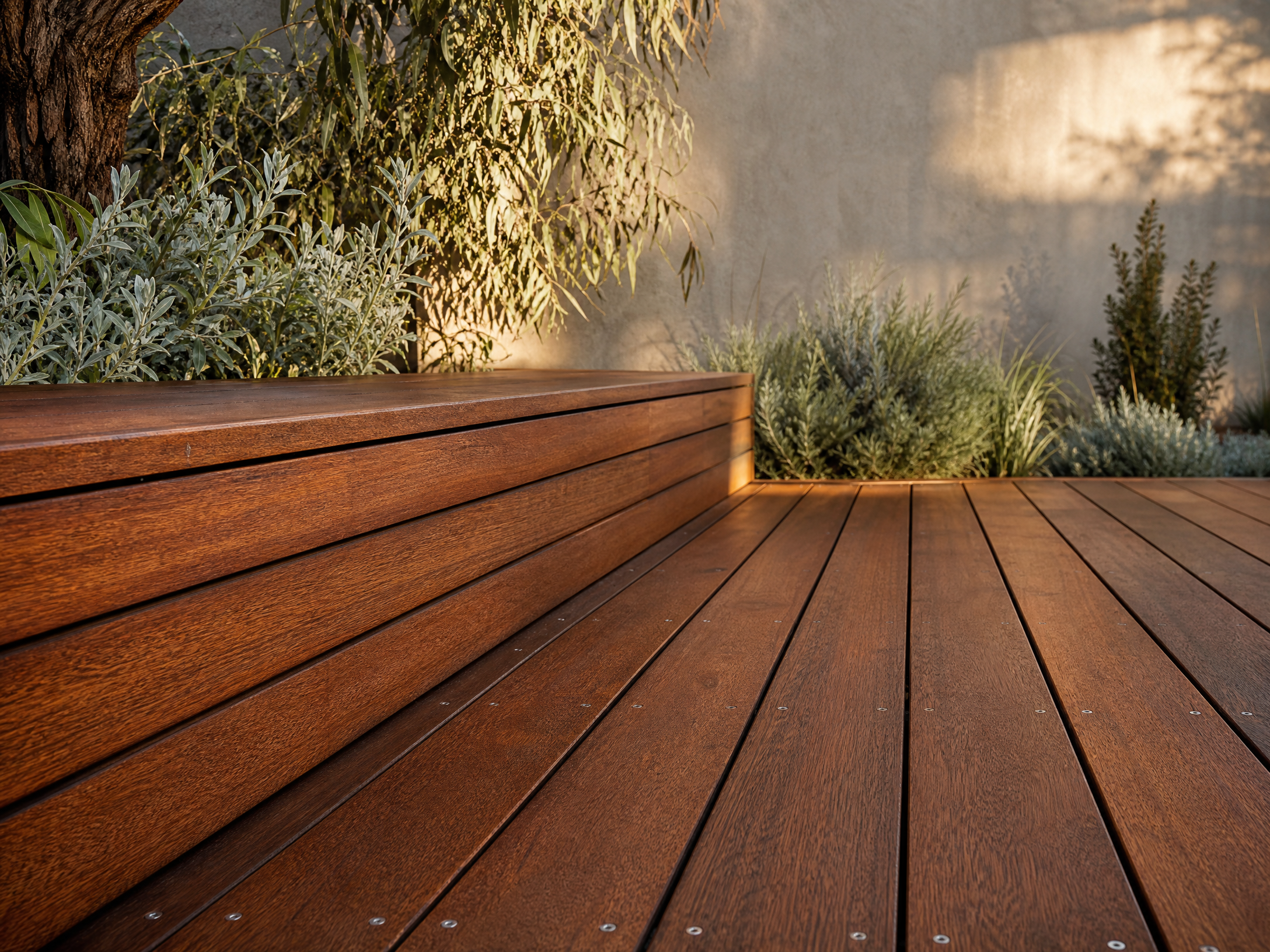 Timber note / grain, variation & care
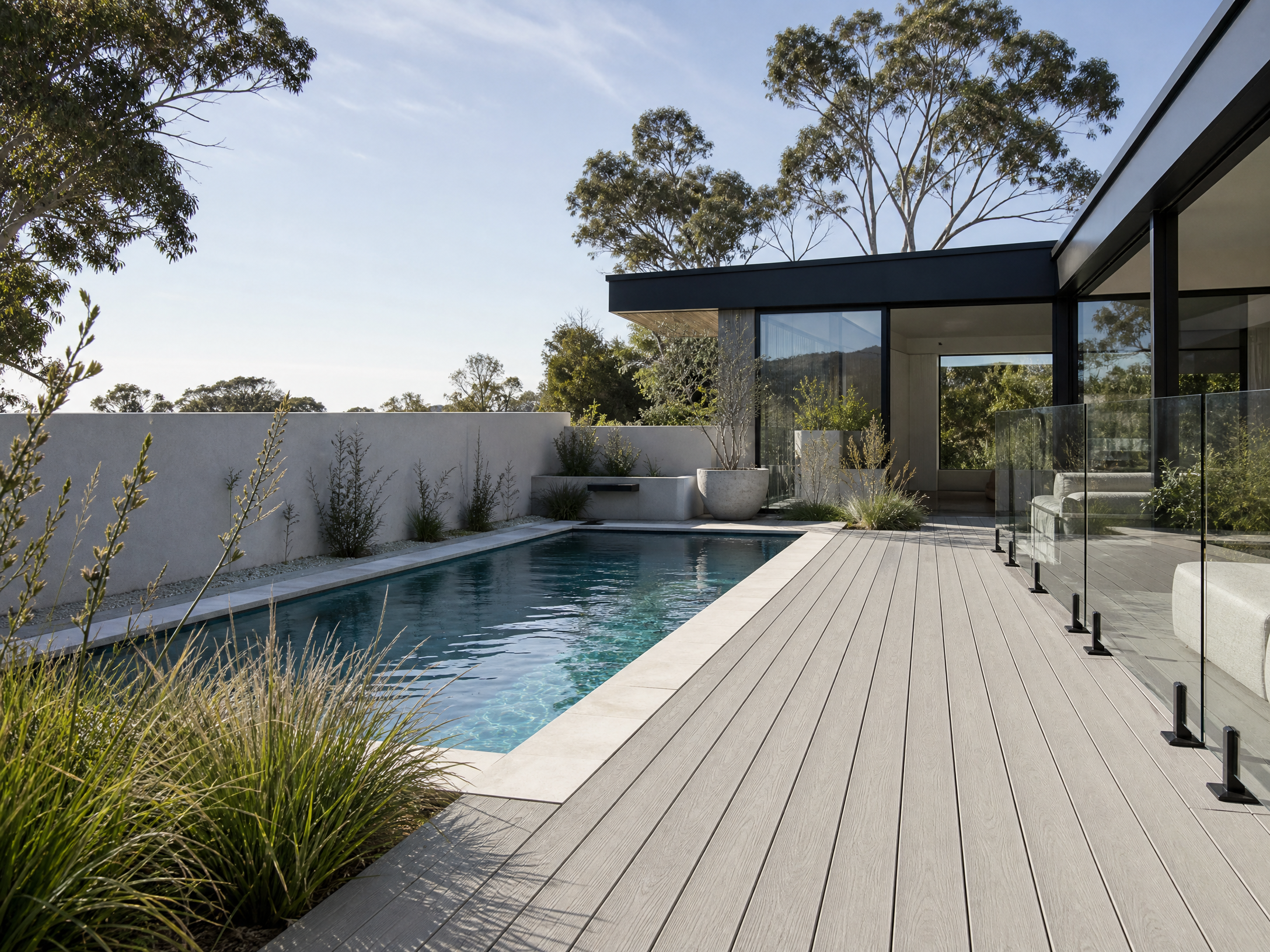 Composite note / system, finish & edge detail
Questions worth carrying into the next conversation.
These answers are planning prompts, not a remote site assessment. Confirm the proposed approach and any project-specific requirements with the responding provider.
01Is composite decking always lower maintenance than timber?⌄
Composite and timber can lead to different care conversations, but neither should be chosen from a headline claim alone. Ask about the exact material, finish, exposure, cleaning expectations and product-specific information for the proposed project.
02Can timber and composite use the same supporting structure?⌄
The board choice does not remove the need to discuss framing, levels, drainage, ventilation, access and the connection to the house. The provider considering the actual site should explain the proposed supporting approach and any product-specific requirements.
03Is it enough to choose a colour from an online image?⌄
Online images are a useful first reference, but samples are best viewed near the proposed deck. Sun, shade, reflected light, paving and the house exterior can all change how a tone and surface feel in context.
04What should I include in a material comparison brief?⌄
Include the rough deck area and height, a few site photos, the intended use, access, any existing deck, pool or future pergola connection, and the parts of the material decision that are still open.